Healthy Weight Gain: Most conversations around nutrition assume everyone’s trying to lose weight, which leaves a whole group of people — naturally thin folks, people recovering from illness or surgery, athletes trying to bulk, older adults losing weight unintentionally — without much practical guidance at all. If you’ve ever tried to search “how to gain weight” online, you’ve probably found a mess of extremes: eat anything, all the time, or follow some rigid bodybuilding meal plan that assumes you’re training six days a week.
Healthy weight gain doesn’t have to be complicated, and it definitely doesn’t mean just eating more junk food until the number on the scale moves. It’s about eating consistently more than your body burns, in a way that’s mostly nutrient-dense, so the weight you gain actually supports your health rather than just adding empty calories. Here’s how that actually works in practice.
The Basic Idea: Calorie Surplus
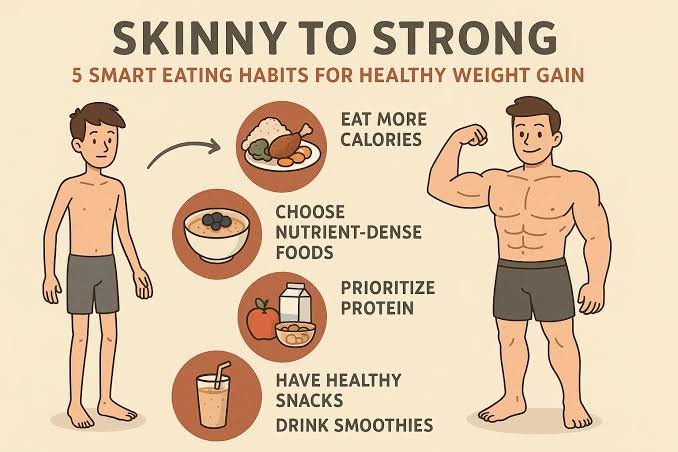
Just like weight loss relies on a calorie deficit, weight gain relies on the opposite — consistently eating somewhat more energy than your body burns over time. This is generally called a calorie surplus.
The size of that surplus matters more than people expect. A very large surplus tends to lead to gaining weight quickly, but a meaningful portion of that weight is often fat rather than muscle, especially without resistance training involved. A moderate, gradual surplus generally supports a better ratio of muscle to fat gain, though the exact number that works best varies by individual, activity level, and goals — which makes this a reasonable thing to discuss with a doctor or dietitian rather than estimate from a generic formula.
It’s also worth saying: “eat more” sounds simple, but for a lot of people trying to gain weight, appetite itself is the actual obstacle, not motivation. Some of the practical suggestions further down are really aimed at that specific problem.
Nutrient-Dense Foods vs. Just “Eating More”
There’s a real difference between gaining weight through nutrient-dense foods and gaining weight by leaning on low-nutrient, highly processed food just because it’s calorie-dense and easy to eat a lot of.
Nutrient-dense, higher-calorie foods — nuts, nut butters, avocado, olive oil, whole grains, dairy, lean and fatty proteins — deliver calories alongside protein, fiber, vitamins, and minerals your body actually needs, especially while you’re in a surplus and building new tissue. Leaning heavily on low-nutrient options (sugary drinks, fried food, heavily processed snacks) can technically move the number on the scale, but tends to come with less favorable effects on things like cholesterol, blood sugar, and overall energy levels, and doesn’t support muscle gain the way a more balanced approach does.
None of this means “clean eating only” or cutting out anything enjoyable — it’s more about building meals around nutrient-dense options most of the time, with room for less structured food without treating it as a failure.
Protein’s Role in Healthy Weight Gain
If you’re aiming to gain weight in the form of muscle rather than mostly fat, protein becomes especially important. It’s the primary building block your body uses to repair and grow muscle tissue, and without adequate protein, a calorie surplus is more likely to result in fat gain with comparatively less muscle gain, particularly if resistance training isn’t part of the picture.
Good sources include meat, poultry, fish, eggs, dairy, legumes, and tofu. Exact protein needs vary by body weight, activity level, and goals, so a specific gram target is really something to get from a doctor or dietitian rather than a general guide — but a practical starting habit is making sure a solid protein source shows up at every meal, rather than concentrating it into just one.
Carbohydrates: An Efficient Way to Add Calories
Carbs are often one of the easiest ways to increase calorie intake without feeling uncomfortably full, since many carb-rich foods are relatively easy to eat in larger quantities compared to protein or fat.
Whole grains (rice, oats, whole wheat bread, quinoa), starchy vegetables (potatoes, sweet potatoes), and fruit are solid options that bring fiber and other nutrients along with the calories. Carbs also play an important role in fueling workouts if strength training is part of your weight-gain plan, since adequate carb intake supports better training performance and recovery.
Healthy Fats: The Most Calorie-Dense Nutrient
Fat provides more than double the calories per gram compared to protein or carbs, which makes it a particularly efficient way to increase calorie intake without needing to eat huge volumes of food — genuinely useful for anyone who struggles to eat large quantities in one sitting.
Unsaturated fats — olive oil, nuts, nut butters, avocado, fatty fish — are generally the better sources to lean on, since they come with additional benefits (like supporting heart health) alongside the calorie density. Practical ways to add fat without much effort: cooking with olive oil, adding nut butter to oatmeal or smoothies, or including avocado with meals.
Meal Frequency: Why Eating More Often Can Help
For a lot of people trying to gain weight, the real challenge isn’t knowing what to eat — it’s simply not having much appetite, or feeling full quickly. In that situation, eating three large meals a day can feel genuinely difficult to sustain.
Spreading intake across five or six smaller meals and snacks throughout the day, rather than trying to force three large ones, tends to be an easier and more consistent approach for a lot of people in this situation. Liquid calories can help too — smoothies with fruit, milk or yogurt, and nut butter or oats mixed in are often easier to consume than an equivalent amount of solid food, especially for someone with a naturally small appetite.
Strength Training’s Role in Healthy Weight Gain
If the goal is gaining muscle rather than just gaining weight in general, resistance training is genuinely one of the more important pieces of the picture, not an optional add-on. Without some form of strength training, a calorie surplus is more likely to result in a higher proportion of fat gain relative to muscle.
You don’t need an elaborate program to start — consistent, progressive resistance training (bodyweight exercises, free weights, machines, whatever’s accessible) that gradually increases in difficulty over time is the general principle that supports muscle gain. Someone new to training, or with specific goals or health considerations, may benefit from working with a qualified trainer, at least initially, to build a program that fits their situation.
Sample Meals and Snack Ideas
Breakfast — oatmeal made with milk instead of water, topped with nut butter, banana, and a drizzle of honey.
Mid-morning snack — a smoothie with milk or yogurt, fruit, oats, and a scoop of nut butter.
Lunch — a grain bowl with rice, a solid portion of chicken or tofu, avocado, and vegetables cooked with olive oil.
Afternoon snack — trail mix with nuts and dried fruit, or crackers with cheese.
Dinner — pasta with a protein source and a vegetable-based sauce, or a stir-fry over rice with plenty of protein.
Before bed (optional) — Greek yogurt with granola, or a glass of milk with a handful of nuts.
None of this needs to be followed exactly — it’s more of an example of how frequent, nutrient-dense eating tends to look in practice for someone trying to gain weight steadily.
Common Mistakes People Make While Trying to Gain Weight
Relying mainly on low-nutrient, highly processed food to hit a higher calorie number, which can work in the short term but tends to come with less favorable effects on cholesterol, blood sugar, and overall energy over time.
Increasing calories dramatically all at once rather than gradually, which often causes digestive discomfort and can be hard to sustain consistently.
Skipping resistance training entirely, which tends to shift the ratio of weight gained toward fat rather than muscle.
Not eating enough protein specifically, even while eating enough calories overall — which limits how much of the gained weight ends up as muscle.
Expecting fast results and getting discouraged. Healthy weight gain, like healthy weight loss, tends to happen gradually, and rapid changes are more often water weight or, at the other extreme, unfavorable fat gain rather than the kind of steady, functional weight gain most people are actually after.
Ignoring hydration and sleep, both of which play a real role in appetite regulation, energy levels, and how well your body recovers from training if that’s part of your plan.
When Unexplained Weight Loss (or Difficulty Gaining) Needs Medical Evaluation
This part matters, and it’s worth taking seriously rather than skipping past. If you’re eating what seems like enough, or even noticeably more than usual, and you’re still losing weight or unable to gain despite consistent effort, that’s a situation worth bringing to a doctor rather than trying to solve through diet alone.
A few specific signs that point toward getting checked out rather than continuing to self-manage:
Losing weight without trying, especially a significant amount over a short period.
Persistent loss of appetite that doesn’t improve, or genuine difficulty eating (pain, nausea, trouble swallowing).
Weight loss alongside other symptoms — fatigue, fever, digestive changes, unusual bowel habits, or anything else that feels off.
Being an older adult experiencing unintentional weight loss, which is taken seriously in medical settings since it can be an early sign of various underlying conditions that are easier to address when caught earlier.
A family history of conditions that can affect weight, or an existing health condition (thyroid issues, digestive disorders, and others) that might be contributing.
Any of these situations are genuinely a “talk to a doctor” moment rather than something to work through with general nutrition advice, since unexplained weight loss can have a wide range of underlying causes, some of which need medical attention specifically rather than more calories.
Final Thoughts
Healthy weight gain isn’t about eating everything in sight or forcing down as much food as possible in one sitting. It’s a steady calorie surplus, built mostly around nutrient-dense food, with protein and resistance training doing the work of directing that extra weight toward muscle rather than only fat. It tends to be gradual, and that’s honestly the point — slow, consistent gain is generally easier on your body and more likely to be the kind of weight that actually serves you, rather than something to lose again later.
If eating enough is a genuine daily struggle, or if you’re losing weight without trying despite eating normally, that’s worth bringing to a doctor rather than pushing through alone.
This article is for general informational purposes and isn’t a substitute for personalized medical or nutritional advice. If you’re trying to gain weight for a specific health reason, or experiencing unexplained or unintentional weight loss, please consult a doctor or registered dietitian.
FAQs For Healthy Weight Gain
Q: How much of a calorie surplus do I need to gain weight healthily?
There’s no single number that fits everyone, since it depends on body size, activity level, metabolism, and goals. A moderate, gradual surplus generally supports a better ratio of muscle to fat gain compared to a very large one, but getting a specific target tailored to your situation is best done with a doctor or dietitian rather than a generic formula.
Q: Will I gain fat instead of muscle if I eat more?
It depends largely on whether resistance training is part of your routine and whether you’re eating enough protein. Without strength training, a calorie surplus tends to result in a higher proportion of fat gain. Combining a moderate surplus with adequate protein and consistent resistance training generally supports a better balance between muscle and fat gain.
Q: When should unintentional weight loss be checked by a doctor rather than managed through diet?
If you’re losing weight without trying, especially a significant amount over a short period, or experiencing persistent appetite loss, difficulty eating, or other symptoms alongside the weight change, it’s worth getting evaluated by a doctor rather than addressing it with general nutrition advice alone. This is especially important for older adults, since unintentional weight loss can be an early sign of conditions that are easier to manage when caught sooner.
- Healthy Weight Gain: 3 Ways How to Gain Weight Safely With Nutritious Foods
- Healthy Weight Loss: A Science-Based 5 Guide to Losing Weight Safely and Sustainably