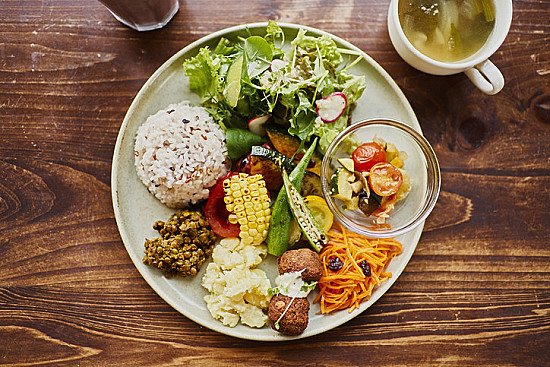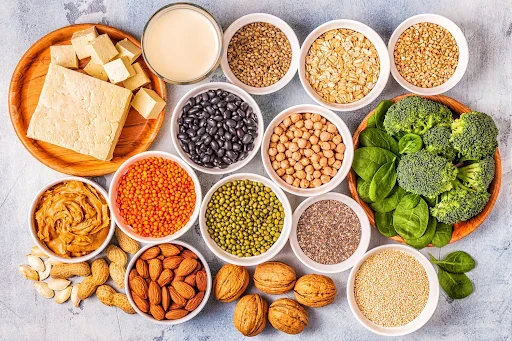
Protein-Rich Foods: Protein’s one of those topics that gets thrown around a lot in gym culture, but you really don’t need to be lifting anything heavier than a grocery bag to care about it. It’s what your body uses to patch up muscle, sure, but also skin, hair, your immune system — pretty much every cell you own has some protein involved in keeping it running. Still, ask most people how much they actually need per day, or which foods are genuinely good sources, and you’ll get a lot of shrugging.
So let’s actually go through it. Animal sources, plant sources, what “complete protein” really means (it’s simpler than it sounds), roughly how much you need, some meal ideas, and a batch of myths that just won’t die no matter how many times nutritionists correct them.
A Quick Look at Where Protein Actually Comes From
| Source | Approx. protein | Notes |
|---|---|---|
| Chicken breast (100g) | ~31g | Lean, complete protein |
| Eggs (2 large) | ~12g | Complete, goes in almost anything |
| Greek yogurt (200g) | ~20g | Complete, plus probiotics |
| Lentils (1 cup, cooked) | ~18g | Incomplete alone, great fiber |
| Chickpeas (1 cup, cooked) | ~15g | Incomplete alone |
| Tofu (100g) | ~8g | Complete, plant-based |
| Salmon (100g) | ~25g | Complete, bonus omega-3s |
| Peanut butter (2 tbsp) | ~7g | Incomplete alone |
| Quinoa (1 cup, cooked) | ~8g | Rare complete plant protein |
| Milk (1 cup) | ~8g | Complete |
These numbers shift a bit depending on brand and how something’s cooked, but they’re close enough to plan meals around.
Okay, But What Does “Complete Protein” Actually Mean?
This term gets thrown around a lot, and honestly, it confuses more people than it helps, so let’s just clear it up properly.
Protein’s built from amino acids, and there are nine of them your body can’t make on its own — you have to get those from food. Those nine are the “essential” ones. A food that contains all nine in decent amounts is called a complete protein. Most animal products — meat, fish, eggs, dairy — happen to check that box naturally.
An incomplete protein is just missing one or more of those nine, or has too little of them. Most plant proteins on their own — beans, lentils, nuts, most grains — fall into this bucket. That doesn’t make them worse, exactly. It just means no single one of them covers the whole list by itself.
Here’s where a lot of old advice oversold things, though: you’ve probably heard you need to eat rice and beans together, at the same meal, or the protein “doesn’t count.” That’s not really how it works. Your body actually holds onto a pool of amino acids over the course of the day, so as long as you’re eating a decent variety of protein sources — even spread across different meals — you’re generally covering your bases. Pairing complementary foods (rice with beans, hummus with pita) is still a nice habit, just not some strict rule you need to follow at every sitting.
And a few plant foods skip this whole issue entirely — quinoa, soy products like tofu and edamame, and buckwheat are complete on their own. Worth remembering if you eat mostly plant-based and don’t want to think too hard about combinations.
Animal-Based Sources
These tend to pack more protein per serving, and they’re naturally complete, which is a big part of why they show up so often in general nutrition advice.
Chicken, turkey, lean beef, pork — solid protein amounts across the board, and leaner cuts keep the fat content down if that matters to you.
Fish and seafood are underrated here. Salmon, tuna, cod — all strong sources, and the fattier ones like salmon throw in omega-3s as a bonus.
Eggs are just efficient. Cheap, versatile, work at breakfast, lunch, or dinner, and they’re a complete protein without any asterisks.
Dairy — milk, yogurt (Greek yogurt especially, since straining it concentrates the protein), cheese, cottage cheese — all contribute meaningfully, plus calcium and a few other nutrients along for the ride.
Plant-Based Sources
Plant sources are generally a bit less protein-dense by weight than animal ones, but they bring fiber and other nutrients most animal foods don’t really offer, so it’s not really “worse,” just a different package.
Legumes are the workhorse here — lentils, chickpeas, black beans, kidney beans. Good protein, and genuinely excellent fiber, so you’re getting two things at once.
Soy products — tofu, tempeh, edamame — are some of the only plant sources that are complete proteins straight out of the gate, which makes them especially handy if you’re eating plant-based and want fewer things to juggle.
Nuts and seeds add protein alongside healthy fats — almonds, peanuts, chia, hemp seeds — though usually in smaller amounts per serving compared to legumes.
Whole grains like quinoa (complete on its own), oats, and buckwheat chip in too, especially when combined with other sources over the day rather than eaten alone.
So How Much Protein Do You Actually Need?
This is where most of the confusion lives, mainly because there isn’t one number that fits everybody.
A commonly cited baseline for a fairly sedentary adult is around 0.8 grams of protein per kilogram of body weight per day. Worth being clear about what that number actually is, though — it’s generally considered a floor to avoid deficiency, not necessarily an ideal target for everyone. People who train regularly, are trying to build muscle, are recovering from an illness or surgery, are pregnant or breastfeeding, or are older adults often do better with somewhat more — though exactly how much more depends on the person and the goal, which is really a conversation for a doctor or dietitian rather than a fixed multiplier you apply blindly.
Rather than chasing an exact gram target, most people are better served just making sure protein shows up at each meal instead of getting crammed into one.
Different Age Groups, Different Needs
Kids and teens need protein roughly proportional to their size and growth stage, and needs can shift during growth spurts. Most kids eating a reasonably varied diet get enough without anyone measuring anything, though it’s worth a chat with a pediatrician if there’s a specific concern.
Adults in general good health usually do fine around that baseline number, nudged up a bit for activity level.
Older adults sometimes need more protein than younger adults, partly tied to the natural muscle loss that comes with age (sometimes called sarcopenia). This is genuinely one where individual medical guidance beats general rules of thumb.
Pregnant and breastfeeding people typically need more protein to support fetal growth and milk production — again, best discussed directly with a healthcare provider rather than estimated on your own.
Meal Ideas That Actually Work
Breakfast — Greek yogurt with berries and a few nuts, or eggs with whole-grain toast.
Lunch — a grain bowl with quinoa, chickpeas, and roasted vegetables, or a grilled chicken salad loaded with veg.
Snack — a handful of almonds, a boiled egg, or hummus with some vegetable sticks.
Dinner — baked salmon, or a tofu stir-fry with brown rice and vegetables.
If you’re plant-based specifically, pairing legumes with grains across your day — lentil soup with bread, rice and beans, hummus and pita — is a simple way to cover a wide amino acid range without doing any actual math.
Myths That Refuse to Go Away
“Plant protein just isn’t as good as animal protein.” Not really true as a blanket statement. Plant protein can absolutely support a well-balanced diet, including for people who train regularly — it usually just takes a bit more variety and volume to hit the same numbers, since a lot of individual plant sources are incomplete or slightly less dense per serving.
“You need protein immediately after a workout or you lose the gains.” This is the old “anabolic window” idea, and it’s been walked back a lot in more recent research. What you eat across the whole day matters more than nailing some narrow 30-minute window after training — though eating protein sometime within a few hours of a workout is still a perfectly sensible habit.
“More protein is always better.” Not necessarily. Past a certain point tied to your body size, activity level, and goals, extra protein doesn’t really add extra benefit, and very high intakes sustained over a long time are worth mentioning to a doctor, especially if you’ve got any existing kidney concerns.
“High protein diets wreck your kidneys.” For people with healthy kidneys, current evidence doesn’t strongly back this up as a general worry at typical higher intakes. It’s a legitimate consideration specifically for people who already have kidney disease — which is exactly why it’s worth an individual conversation rather than a rule that applies to everyone.
“You can’t build real muscle on a plant-based diet.” Not well supported. Plant-based diets can absolutely support muscle building, as long as total protein and variety are adequate. It usually takes a bit more deliberate meal planning than eating meat by default, but it’s not some hard wall.
A Few Things Worth Doing
Sneak protein into meals where you wouldn’t normally think about it — a spoon of Greek yogurt in a smoothie, a boiled egg as a mid-morning snack.
If you’re plant-based, don’t stress about pairing foods perfectly every single time. Aim for good variety across the week instead.
Check labels on packaged plant protein products — bars, meat substitutes, that sort of thing. Protein content swings more between brands than you’d expect, and some lean heavily on added sugar or sodium to make up for flavor.
And if you’ve got a specific goal — building muscle, recovering from something, an age-related concern — get an actual number from a doctor or dietitian rather than leaning on general guidelines like the ones here.
Wrapping Up
Once you get past the jargon around “complete” and “incomplete,” protein isn’t really that complicated. It comes down to eating a reasonable mix across your meals — animal, plant, or both — without needing to obsess over grams unless you’ve got a specific reason to. Most people already eating a mix of the sources above are doing better than they’d probably guess.
This article is for general informational purposes and isn’t a substitute for personalized advice from a doctor or registered dietitian, particularly if you have specific health conditions, medical concerns, or nutrition goals.
FAQs for Protein-Rich Foods
Q: Do I need animal protein to get all the essential amino acids?
No. Most animal foods are naturally complete, but a handful of plant foods are too — quinoa, soy products like tofu and edamame, and buckwheat. Beyond that, eating a decent variety of plant protein sources across your day (not necessarily one meal) generally covers what you need without requiring any animal protein at all.
Q: Do I really have to eat rice and beans together to “complete” the protein?
Not strictly. That advice comes from older nutrition thinking that assumed amino acids had to be combined at the exact same sitting. What’s better understood now is that your body draws from a wider pool of amino acids across the day, so eating varied protein sources over your meals is generally enough. Pairing foods together is still a fine habit — it’s just not a hard requirement.
Q: Can eating too much protein actually hurt you?
For most healthy adults, moderately higher protein intake isn’t well established as harmful, though very high amounts kept up long-term are worth raising with a doctor, especially if you have existing kidney issues. There’s also a point where extra protein stops adding much benefit relative to your activity and goals — so more isn’t automatically better.
➛ For More Updates Visit Nutrition Guide
- Fiber-Rich Foods: Benefits, Best Sources, and How Much Fiber You Need
- Protein-Rich Foods: 5 Best Sources, Daily Needs, and How to Add More Protein to Your Diet
- What Is a Balanced Diet? A Complete 7 Guide to Essential Nutrients and Healthy Eating