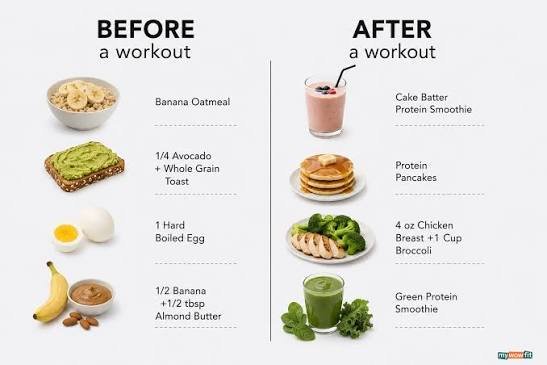
Pre Workout and Post Workout Nutrition: Walk into any gym conversation and you’ll eventually hear someone debating the “right” pre-workout snack or whether you absolutely must eat protein within some magic window after training. A lot of this advice gets more complicated than it needs to be, especially for anyone who isn’t training for competition. The core ideas behind exercise nutrition are actually fairly straightforward once you separate the genuinely useful basics from the overly precise rules that mostly matter for elite athletes.
This guide walks through what to eat before and after exercise, why it matters, and how it shifts depending on what kind of activity you’re actually doing — because a 20-minute walk and a 90-minute training session call for pretty different approaches.
Quick Overview: Before vs. After
| Point | Before Exercise | After Exercise |
|---|---|---|
| Main focus | Available energy, avoiding discomfort | Replenishing energy, supporting repair |
| Key nutrient | Carbohydrates | Protein + carbohydrates |
| Timing | Roughly 1-3 hours before (varies by meal size) | Within a few hours works for most people |
| Hydration | Start well-hydrated beforehand | Replace fluids lost through sweat |
| Best avoided | Very high-fat or high-fiber meals right before | Skipping food/fluids entirely afterward |
Why Carbohydrates Matter Before Exercise
Carbohydrates are broken down into glucose, which is stored in your muscles and liver as glycogen — essentially your body’s readily available fuel reserve for physical activity. During exercise, especially anything moderate to intense, your body draws on these glycogen stores fairly heavily, so having them reasonably topped up beforehand tends to support better energy and performance during the session.
This matters more the longer and more intense the activity is. For a short, easy walk, your existing glycogen stores are generally more than sufficient without needing a specific pre-workout meal. For a longer or more demanding session — an hour of cardio, a heavier strength training session — having eaten a carb-containing meal or snack in the hours beforehand tends to make a more noticeable difference in how the session actually feels.
What to Eat Before Exercise
The general goal before a workout is a meal or snack that’s reasonably easy to digest, provides accessible energy, and doesn’t sit heavily in your stomach during activity.
If you have 2-3 hours before exercising, a fuller meal works well — something like oats with fruit, a sandwich with lean protein, or rice with chicken and vegetables. This gives your body enough time to digest more thoroughly before you start moving.
If you only have 30-60 minutes, something lighter and more easily digestible tends to sit better — a banana, a slice of toast with a thin layer of nut butter, or a small smoothie. Very high-fat, high-fiber, or unusually large meals right before exercise are generally worth avoiding, since they can cause digestive discomfort once you start moving, particularly with more intense activity.
If you’re exercising first thing in the morning and don’t have much appetite, a small, easily digestible snack is often enough — some people do fine training in a fasted state for lighter activity, though this varies quite a bit by individual and by how intense the session is. There’s no universal right answer here; it’s largely about what your body tolerates well and what you’ve found works through experience.
Hydration Before Exercise
Starting a workout already somewhat dehydrated tends to make the session feel harder than it needs to, and can affect both performance and how you feel afterward. Rather than trying to hydrate all at once right before exercising, drinking water consistently throughout the day leading up to activity tends to work better than a large amount consumed right before starting.
For most moderate exercise sessions under an hour, plain water beforehand is generally sufficient. Longer or more intense sessions, particularly in hot conditions, may benefit from a bit more attention to fluid and electrolyte intake, which is covered further below.
Nutrition During Exercise (When It Actually Matters)
For most people doing moderate exercise lasting under an hour, eating or drinking anything specific during the activity generally isn’t necessary — your pre-workout meal and existing glycogen stores are typically enough to cover it.
For longer sessions — roughly 60-90 minutes or more of continuous, moderate-to-intense activity — some additional carbohydrate intake during the activity itself can help maintain energy, particularly for endurance-type exercise like longer runs or cycling. This is generally more relevant for athletes training for endurance events than for someone doing a typical gym session, so it’s not something most casual exercisers need to plan around.
Hydration during longer or more intense sessions matters more broadly, though. Sipping water regularly throughout a longer workout, rather than only drinking before and after, tends to support better overall hydration and comfort during the activity.
Why Protein and Carbs Matter After Exercise
After exercise, your body is in a repair and replenishment phase — rebuilding muscle tissue that’s experienced some breakdown during activity (particularly with resistance training), and restoring the glycogen stores that were used up during the session.
Protein provides the amino acids your body uses for this repair and rebuilding process. Carbohydrates help restock glycogen stores, which supports recovery and readiness for your next session. Eating both together after exercise is generally considered more effective for recovery than either alone, particularly following resistance training or longer endurance sessions.
The “Anabolic Window” — What’s Actually True Here
You’ve probably heard you need to eat protein within a very specific, narrow window after training — sometimes cited as 30 minutes — or you’ll miss out on the recovery benefits entirely. This idea has been significantly overstated in a lot of older fitness advice, and more recent research has generally moved toward a more relaxed view of the whole thing.
What seems to matter more is your total protein intake across the day, rather than nailing a razor-thin window immediately after exercise. That said, eating a meal or snack containing protein and carbs sometime within a few hours of training is still a reasonable, sensible habit — it’s just not the make-or-break moment older advice made it out to be. If you’ve already eaten a decent meal shortly before training, there’s generally no urgent need to eat again the instant you finish.
What to Eat After Exercise
The general aim afterward is a combination of protein and carbohydrates, in a portion that reflects how intense or long the session was.
Some practical options: a smoothie with protein powder or Greek yogurt, fruit, and oats. Greek yogurt with granola and berries. Eggs with whole-grain toast. A chicken or tofu bowl with rice and vegetables. Chocolate milk, which despite sounding informal is actually a commonly cited practical option, since it happens to offer a reasonable carb-to-protein ratio in an easy-to-consume form.
For a lighter session — a short walk, a light yoga class — a full recovery meal usually isn’t necessary; your next regular meal typically covers what your body needs without requiring a specific post-workout snack in between.
Hydration After Exercise
Replacing fluids lost through sweat is worth paying attention to, particularly after a longer or more intense session, or exercise in hot conditions. Plain water covers most moderate sessions well. For longer, more intense, or particularly sweaty workouts, replenishing electrolytes (sodium, potassium, and others lost through sweat) alongside water can help, especially if you notice symptoms like unusual fatigue, dizziness, or cramping — though this is more relevant to endurance athletes or exercise in hot climates than to a typical moderate gym session.
A simple, practical check: noticeably dark urine after exercise can be a sign you need more fluids, while pale yellow generally suggests reasonably adequate hydration — not a precise medical measure, but a useful rough indicator.
How This Shifts by Exercise Duration and Intensity
Short, light activity (under 30 minutes, easy pace) — a walk, light stretching, casual cycling. Specific pre- or post-workout nutrition generally isn’t necessary here; your regular meals typically cover it without needing anything extra built around the activity.
Moderate activity (30-60 minutes) — a typical gym session, a moderate run, a class. A light pre-workout snack if it’s been a while since your last meal, and a balanced meal with protein and carbs sometime within a few hours afterward, tends to support both performance and recovery reasonably well.
Longer or more intense activity (60+ minutes, or high intensity) — longer runs, intense training sessions, competitive sports. More attention to pre-workout carb intake, hydration during the activity itself, and a more deliberate post-workout meal with both protein and carbs tends to matter more here, since the demands on glycogen stores and muscle tissue are generally higher.
Practical Examples for Beginners
Morning gym session, moderate intensity: a banana with a small amount of nut butter about 30-45 minutes beforehand, then a proper meal with protein, carbs, and vegetables within a couple of hours after.
Evening workout after a full day of regular meals: since you’ve likely already eaten reasonably recently, a smaller snack (or sometimes nothing at all) before training is often fine, followed by a normal dinner with a good protein source afterward.
Longer weekend activity — a hike, a longer run: a more substantial carb-containing meal 2-3 hours beforehand, water throughout the activity (with electrolytes if it’s particularly long, hot, or intense), and a fuller meal with both protein and carbs afterward.
Light activity — a casual walk, gentle yoga: generally no special nutrition planning needed beyond your normal regular meals for the day.
Common Mistakes
Skipping food entirely before a longer or more intense workout, which often leads to feeling unusually fatigued, lightheaded, or simply underpowered partway through the session.
Eating a very large, heavy, or high-fat meal too close to exercise, which can cause digestive discomfort once activity starts.
Fixating on the idea of a strict, narrow post-workout eating window, and stressing over hitting it exactly, when total daily intake generally matters more than precise timing.
Under-hydrating both before and during exercise, particularly in hot weather or during longer sessions, which can affect both performance and recovery.
Treating every type of exercise the same nutritionally — a 20-minute walk and a 90-minute training session have genuinely different nutritional needs, and applying advice meant for intense athletic training to light daily activity isn’t usually necessary or helpful.
Relying heavily on specialized sports supplements or products for routine, moderate exercise, when regular whole foods generally cover the same needs perfectly well for most casual exercisers.
When to Get More Specific, Individualized Guidance
General guidance like this works well for most people doing regular, moderate exercise. That said, a few situations are worth a more tailored conversation with a doctor, registered dietitian, or sports nutritionist rather than relying on general advice: training for a specific athletic event or competition, having a health condition that affects energy metabolism (diabetes, for instance, where exercise timing and food intake interact with blood sugar management), pregnancy, or noticing persistent fatigue, dizziness, or poor recovery despite reasonably consistent eating habits around exercise.
Final Thoughts For pre workout and post workout nutrition
Nutrition around exercise doesn’t need to be treated like a science experiment for most people doing regular, moderate activity. The core principles are fairly simple: have some accessible energy on board beforehand, stay reasonably hydrated throughout, and give your body protein and carbs afterward to support recovery — scaling the specifics up a bit as your workouts get longer or more intense, and not worrying much about it at all for lighter daily movement. The rigid rules and narrow windows you’ll see floating around fitness spaces matter a lot more for competitive athletes than for someone maintaining a regular, moderate exercise routine.
This article is for general informational purposes and isn’t a substitute for personalized advice from a doctor, registered dietitian, or sports nutrition professional, particularly for anyone with a specific health condition, training goal, or medical concern.
FAQs
Q: Do I really need to eat protein within 30 minutes after working out?
Not based on more current understanding of this. That narrow “anabolic window” idea has been significantly overstated in older fitness advice. What seems to matter more is your total protein intake across the whole day, rather than hitting a precise window immediately after training. Eating protein and carbs sometime within a few hours of exercising is still a sensible habit — it just doesn’t need to happen the instant you finish.
Q: What should I eat before a workout if I only have 30 minutes?
Something light and easily digestible tends to work best in a short window — a banana, a small smoothie, or toast with a thin layer of nut butter. Larger, heavier, or high-fat meals are generally better saved for 2-3 hours before exercise, since they need more time to digest comfortably.
Q: Do I need special sports drinks or supplements for a normal workout?
For most moderate exercise sessions under an hour, plain water and regular whole foods generally cover what your body needs without requiring specialized sports products. Electrolyte drinks and more specific supplementation tend to matter more for longer, more intense sessions, endurance training, or exercise in hot conditions — not for a typical gym visit or moderate daily workout.
- Daily Calorie Needs: How Many Calories Do You Need a Day? A Practical Guide

- Healthy Weight Gain: 3 Ways How to Gain Weight Safely With Nutritious Foods
- Healthy Weight Loss: A Science-Based 5 Guide to Losing Weight Safely and Sustainably
2 thoughts on “Pre Workout and Post Workout: 5 Nutrition Before and After Exercise – What to Eat for Energy and Recovery”